I have wondered where the term "Dixie" came from, and how it came to refer to the American South. I came across the answer today, doing some background study for an economics seminar with Classical Conversations.
A recent issue of Kids Discover magazine was dedicated to the history of money, from ancient times to today. In the early decades of American history, there was no real standard currency. During the 1830s a bank in New Orleans printed some $10 notes, on which they used the French word for ten, dix. People began calling these bank notes "dixes" or "dixies." Over time, the term Dixie referred to Louisiana, and eventually the whole south. [Kids Discover, Vol. 20, Issue 4, April 2010]
Now that's an interesting bit of Southern trivia.
Monday, August 30, 2010
Thursday, August 26, 2010
We all have a history
The more I study history, the more clear it becomes that people are not perfect. More specifically, we are all descendants of opportunistic people.
 The Western influence on Hawaii, for example, may seem paternalistic or motivated by greed. In 1778, Captain James Cook discovered the island as he looked for the Northwest Passage. With Hawaii on the map of Westerners, the islands became targets for merchants and missionaries. What would have happened if the "real" culture of Hawaii had not been disturbed? Well, according to some historical theories, the islands of Hawaii were first discovered and inhabited by people from the islands of Marquesas. Centuries (?) later, the people of Tahiti also discovered Hawaii, and brought with them new elements of culture.
So, when you think of the "real" culture of Hawaii, is it that of the Marquesas or the Tahitians? And doesn't real Hawaiian culture include the famous luau tradition? I was surprised to learn that the luau tradition was actually brought to Hawaii by Westerners. So what is the pure culture?
(We also need to ask if original, native cultures are worth preserving. In some lands, the native culture includes cannibalism. Should that be preserved? But that is another discussion.)
We naturally want things to be right and fair. But human history is full of conquest. I expect that nearly every land in the world has been conquered at one time or another. It did not take long in history for there to be no pure cultures.
As lands were conquered, wrongs were done. Everyone today is descended from a combination of victors and victims. The wrongs of history cannot be undone. Perhaps, for recent history, some compensation can be made for victims.
But in the grander scheme of life, we can only do what is right in the here and now. I follow the laws of real estate for the current government of my land, not the laws of the Native Americans who once lived here. I can't undo the past, but I can live honorably in the context of my life. It's the best I can do.
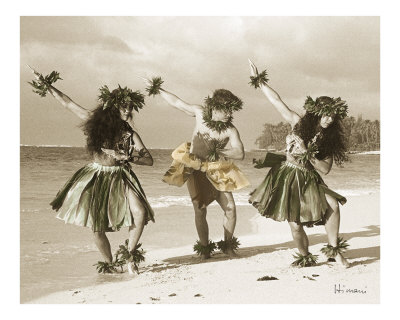
So, when you think of the "real" culture of Hawaii, is it that of the Marquesas or the Tahitians? And doesn't real Hawaiian culture include the famous luau tradition? I was surprised to learn that the luau tradition was actually brought to Hawaii by Westerners. So what is the pure culture?
(We also need to ask if original, native cultures are worth preserving. In some lands, the native culture includes cannibalism. Should that be preserved? But that is another discussion.)
We naturally want things to be right and fair. But human history is full of conquest. I expect that nearly every land in the world has been conquered at one time or another. It did not take long in history for there to be no pure cultures.
As lands were conquered, wrongs were done. Everyone today is descended from a combination of victors and victims. The wrongs of history cannot be undone. Perhaps, for recent history, some compensation can be made for victims.
But in the grander scheme of life, we can only do what is right in the here and now. I follow the laws of real estate for the current government of my land, not the laws of the Native Americans who once lived here. I can't undo the past, but I can live honorably in the context of my life. It's the best I can do.


Monday, August 16, 2010
Celebrating Baptism
Yesterday at Belews Lake we celebrated new life as two people were baptized. It was a great time of excitement about the redemption of Jesus and the encouragement of fellow believers. As the crowd gathered in the light rain, we all felt a spirit of excitement. It was inspiring to see so many come together to share the moment.
Baptism reminds us of several things. First it remindes us that Jesus died for us and was buried in a tomb. On the third day he rose from the dead, winning the victory over death. Second, it reminds us that anyone who comes to trust Christ has put to death the old, sinful nature, and has received new life in Jesus. Third, baptism reminds us that we have friends and encouragers who will walk with us through the good times and the bad times of life.
Finally, baptism reminds us that belonging to Jesus is a reason to celebrate! He frees us from our guilt, gives us spiritual eyes to understand the truth, and showers us with his love. In Jesus we are truly free and truly alive!
Heaven rejoices with us when someone says through baptism, "I belong to Jesus!"
Baptism reminds us of several things. First it remindes us that Jesus died for us and was buried in a tomb. On the third day he rose from the dead, winning the victory over death. Second, it reminds us that anyone who comes to trust Christ has put to death the old, sinful nature, and has received new life in Jesus. Third, baptism reminds us that we have friends and encouragers who will walk with us through the good times and the bad times of life.
Finally, baptism reminds us that belonging to Jesus is a reason to celebrate! He frees us from our guilt, gives us spiritual eyes to understand the truth, and showers us with his love. In Jesus we are truly free and truly alive!
Heaven rejoices with us when someone says through baptism, "I belong to Jesus!"
Thursday, August 5, 2010
Life to the Max
I'm reading a book called A Thomas Jefferson Education. It has lots of good ideas about learning and teaching. The most important insight is that students have to take responsibility for their own learning. Teachers can't make students learn. Unless the student wants to learn, he will never do more than the bare minimum.
Jesus also wants us to take responsibility for our own spiritual growth. Loving God means knowing him, growing in our relationship with him. We can read the Bible and pray with a sense of obligation, but unless we bring a hunger for God, we will never really become intimate with him.
If we miss out on intimacy with God, then we have missed out on the best part of life. So, I want to be a student, a disciple, of Jesus. I want life to the max.
Jesus also wants us to take responsibility for our own spiritual growth. Loving God means knowing him, growing in our relationship with him. We can read the Bible and pray with a sense of obligation, but unless we bring a hunger for God, we will never really become intimate with him.
If we miss out on intimacy with God, then we have missed out on the best part of life. So, I want to be a student, a disciple, of Jesus. I want life to the max.
Tuesday, July 20, 2010
Worth the Effort

There is always more to learn. I love it when I read a passage and find a new insight, something so obvious that I wonder how I ever missed it before.
Reading Job 28 we find the words of Job himself, a man crushed emotionally and devastated physically, describing the material treasures of the earth and comparing them with the value of wisdom.
He describes the process of mining for silver and gold, digging and tunnelling through the rock to find treasure. Not much has changed in the 4000 (?) years since these words were written. We still want the treasures of the earth, and we still dig holes to get to them.

Am I working hard enough to gain wisdom? I need to use the right tools: humility, listening, asking, reading, thinking and praying.
I need to do the right kind of mining.
Wednesday, July 14, 2010
Control
Americans have always been suspicious of those who want control. Pilgrims came across the Atlantic to get away from those who would control their religious beliefs. The colonists rejected the control of the British government, which sometimes set policy from across the ocean.

The old West was populated by people who wanted freedom and elbow room. They rejected the control of those in the East.
But the study of history is a study of which people were governing or controling others. Sometimes those controling forces were miltary, sometimes religious, sometimes both. Sometimes those forces were benevolent, but often they were not.
God seeks to control us, but not by force, and not by religion. He wants to change who we are on the inside, so that we freely choose to do what is right. That is life and freedom. And it brings us joy!

The old West was populated by people who wanted freedom and elbow room. They rejected the control of those in the East.
But the study of history is a study of which people were governing or controling others. Sometimes those controling forces were miltary, sometimes religious, sometimes both. Sometimes those forces were benevolent, but often they were not.
God seeks to control us, but not by force, and not by religion. He wants to change who we are on the inside, so that we freely choose to do what is right. That is life and freedom. And it brings us joy!
Wednesday, July 7, 2010
American Openness
In the U.S. we value truth. Truth figures prominently in our Declaration of Independence. In the first amendment of our Constitution, we provide for the freedom of the press. While many government actions have been kept quiet, we value the "right to know."
 Our spirit of openness seeks to shine light on even the dark episodes of our own history. We don't ignore our history of slavery, but but recognize it as an institution of gross immorality. We can evaluate our leaders of the past, without having to whitewash their images for propaganda purposes. We can request the publication of documents under the Freedom of Information Act.
And we demand that government business be conducted in the open. Except for matters of national security, we don't like secrets. The secrecy of this year's health care debate among our legislators struck a nerve with Americans.
We value openness. We want to know how our government is working. After all, we are governing ourselves. We are the government. We do need for our citizens to be informed. That requires freedom of speech and freedom of the press. We can ask anything. I'm naturally curious, so I like asking questions.

And we demand that government business be conducted in the open. Except for matters of national security, we don't like secrets. The secrecy of this year's health care debate among our legislators struck a nerve with Americans.
We value openness. We want to know how our government is working. After all, we are governing ourselves. We are the government. We do need for our citizens to be informed. That requires freedom of speech and freedom of the press. We can ask anything. I'm naturally curious, so I like asking questions.
Subscribe to:
Posts (Atom)